Decades of research confirm what the best parents, educators, and leaders already know: people grow fastest where they are recognized, not where they are repaired.
The weight of deficit thinking
Walk into most schools, most workplaces, most homes — and pay attention to the first thing people look for. In almost every case, it's what's wrong. What's missing. What's not meeting the standard. This is deficit-based thinking: the automatic habit of scanning for gaps before scanning for gifts.
It's not malicious. It's structural. Schools are built around remediation. Performance reviews are built around weaknesses. Parenting advice is built around problems to solve. The system rewards the identification of deficits so thoroughly that we stop noticing we're doing it.
And the cost is real. Research by Carol Dweck at Stanford found that mindsets shape trajectories — children who believe their abilities are fixed avoid challenges that might expose them, while those who believe abilities can grow seek out difficulty as an opportunity. But Dweck's work also points in another direction: when we focus on what's wrong, we inadvertently signal that being wrong is the most important thing about a person. The correction becomes the relationship.
What the research actually says
Gallup's CliftonStrengths research — drawing on data from over 20 million people across 190 countries — found that employees who have the opportunity to focus on their strengths every day are six times more likely to be engaged in their work and three times more likely to report having an excellent quality of life. That's not soft motivation advice. That's outcome data.
The VIA Classification of Character Strengths, developed by Martin Seligman and Christopher Peterson, identifies 24 strengths across six virtues — and decades of validation studies show that people who deploy their signature strengths experience significantly higher well-being, lower depression rates, and greater life satisfaction. The mechanism isn't just feeling good. It's alignment: doing what you're built to do.
For children specifically, a 2015 meta-analysis published in Review of Educational Research found that strengths-based approaches in education were associated with improved academic achievement, better student-teacher relationships, and reduced behavior problems. The effect was strongest when strengths were identified by adults who knew the student well — and used to shape how that adult engaged with them.
Why deficit models persist
If the evidence for strengths-based approaches is this strong, why do deficit models still dominate? Part of the answer is structural: it's faster to identify what's wrong. A checklist of problems takes minutes. A genuine map of strengths takes observation, conversation, and time.
But there's a deeper reason. Deficit thinking feels like it's helping. When a child struggles and we immediately intervene to fix the struggle, we feel like we're doing something. Scanning for weakness and correcting it is active, visible, measurable. Noticing a child's brilliance — and designing environments where it can flourish — requires patience, attention, and a willingness to let the obvious problem recede in favor of the less obvious gift.
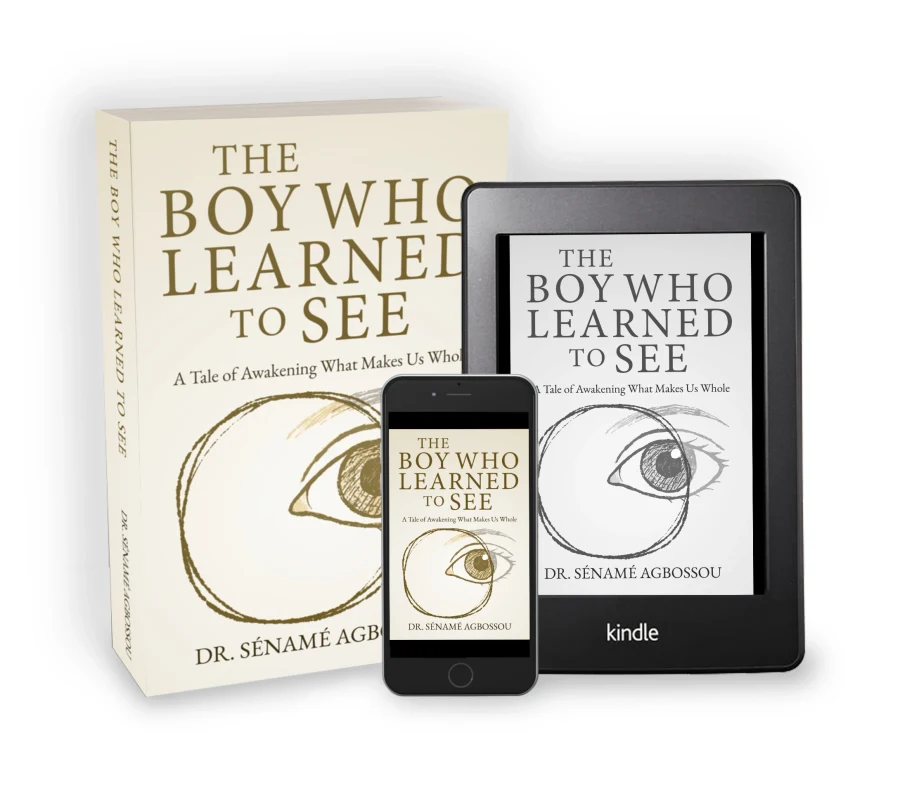
This is the shift that Second Sight is built around. Not ignoring difficulty — but seeing the whole person first. Not pretending problems don't exist — but refusing to let them be the whole story.
What Second Sight actually means
In the book, the village healer Makori teaches Tala to see differently. Not to ignore what's broken — but to notice what's brilliant first. The rest of the interaction flows from there. When you see someone as capable, curious, whole — your behavior toward them shifts. The questions you ask change. The conversations you start change. The feedback you give changes.
This isn't positive thinking. It's not the law of attraction. It's a perceptual practice: deliberately training yourself to see what's strong before you see what's weak.
For parents, this means noticing what your child is drawn to before you start managing what they're struggling with. For educators, it means identifying what each student does brilliantly and building outward from there. For leaders, it means starting talent conversations from what's exceptional before you ever get to development areas.
The compounding effect
Here's what research also tells us about recognition: it compounds. A child who is regularly seen for their strengths develops a more stable sense of self — less dependent on external validation, more able to take appropriate risks. An adult who is recognized for what they do well brings more of themselves to their work, not less. The act of seeing strengths doesn't just improve the moment. It changes the person being seen.
Second Sight builds this into its structure deliberately. The parable shifts your perception. The exercises — the Gift Circle, Makori's Mirror, the 30-Day Challenge — train the habit. Together, they offer something rare: a coherent method for learning to see differently, rather than just being told you should.
The starting point
If you're a parent, it's simple: before you ask what's wrong with your child's report card, ask what they did well — and follow that thread. If you're an educator: before the review meeting, find one thing the student is extraordinary at and lead with that. If you're a leader: review your last round of feedback. How much of it started from weakness?
Small shifts in what you look for first change what you see. What you see changes how you respond. How you respond changes the people around you — and what they're capable of becoming.
This is what the science has been saying for decades. Second Sight is the translation.